

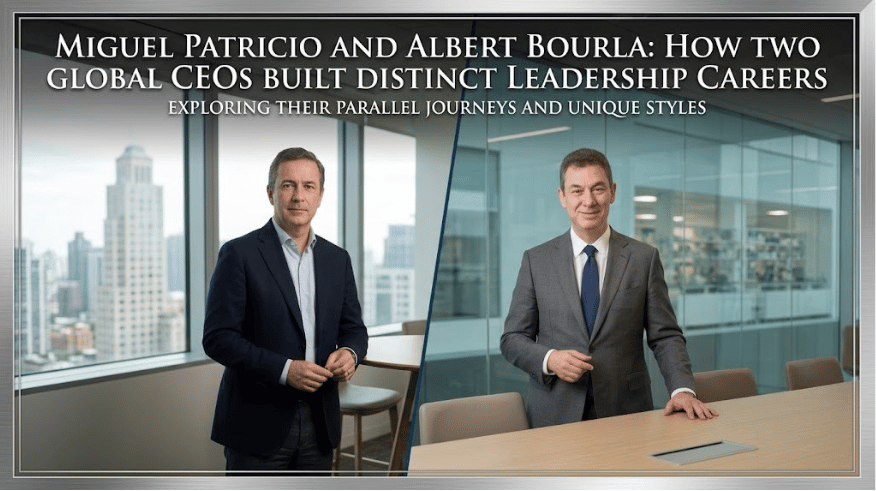
Miguel Patricio and Albert Bourla are international business leaders best known for guiding major companies in the food and pharmaceutical industries. Patricio led Kraft Heinz after a long consumer-goods career, while Bourla rose through Pfizer before becoming its chairman and chief executive officer.
Although their names sometimes appear together in executive rankings and leadership discussions, they followed separate professional paths. There is no widely documented business partnership between them. Their connection is mainly that both became prominent leaders of large multinational companies during the same period.
| Key fact | Miguel Patricio | Albert Bourla |
| National background | Portuguese | Greek-American |
| Primary industry | Food, beverages and consumer goods | Pharmaceuticals and biotechnology |
| Best-known company | Kraft Heinz | Pfizer |
| Major leadership role | Former Kraft Heinz CEO and chair | Pfizer chairman and CEO |
| Education | Business administration | Veterinary medicine and reproductive biotechnology |
| Earlier experience | AB InBev, Coca-Cola, Johnson & Johnson and Philip Morris | More than three decades at Pfizer |
| Leadership strength | Branding, marketing and business transformation | Science-led strategy and pharmaceutical operations |
Direct answer: Miguel Patricio is a Portuguese consumer-goods executive who served as Kraft Heinz’s CEO from 2019 through 2023. Albert Bourla is a Greek-American veterinarian and corporate executive who has led Pfizer as CEO since 2019. They are not related or business partners, but both have managed globally recognized companies.
Who Are Miguel Patricio and Albert Bourla?

The phrase Miguel Patricio and Albert Bourla brings together two executives whose careers show different routes to corporate leadership. Patricio built much of his reputation in marketing and consumer products. His work involved brands that compete for everyday attention in supermarkets, restaurants and households.
He later took responsibility for Kraft Heinz during a period when the company needed to strengthen its operations, brands and long-term direction. Bourla followed a science-based path. He trained as a veterinarian and entered Pfizer through its animal-health operations in Greece.
He then moved through a series of regional and global management positions before taking charge of the entire pharmaceutical company. Their stories offer a useful comparison. One career centers on consumer behavior and brand management. The other combines scientific training with pharmaceutical strategy, manufacturing, and medicine development.
Miguel Patricio’s Background and Education
Miguel Patricio was born in Portugal in 1966. He studied business administration at Fundação Getulio Vargas in São Paulo, Brazil. That international education reflected the direction of his later career. Instead of remaining in one market, he worked across regions and learned how companies adapt brands to different cultures, buying habits and economic conditions.
Before joining the brewing industry, Patricio held positions at several major consumer companies. His earlier employers included Philip Morris, Coca-Cola and Johnson & Johnson. These roles gave him experience with products that rely heavily on distribution, advertising, pricing and customer loyalty. Those skills later became central to his leadership identity.
How Miguel Patricio Built His Career at AB InBev
Patricio joined Ambev in 1998. Ambev later became part of Anheuser-Busch InBev, one of the world’s largest brewing groups. He held several senior marketing and regional leadership positions. His responsibilities included work in North America and the Asia-Pacific region. In 2012, he became AB InBev’s chief marketing officer.
As chief marketing officer, he helped oversee a portfolio of global and regional beer brands. That role required more than creating advertisements. It involved deciding how brands should be positioned, which audiences they should target, and how marketing investments could support sales. His experience also exposed him to the challenges of managing well-known products across countries.
A campaign that works in one market may fail in another because consumers have different preferences, traditions or relationships with a brand. AB InBev’s current biography for Patricio notes that he spent about two decades with the organization and held several major operating and marketing roles. It also identifies him as a representative of the company’s main shareholders on its board.
Miguel Patricio’s Leadership at Kraft Heinz
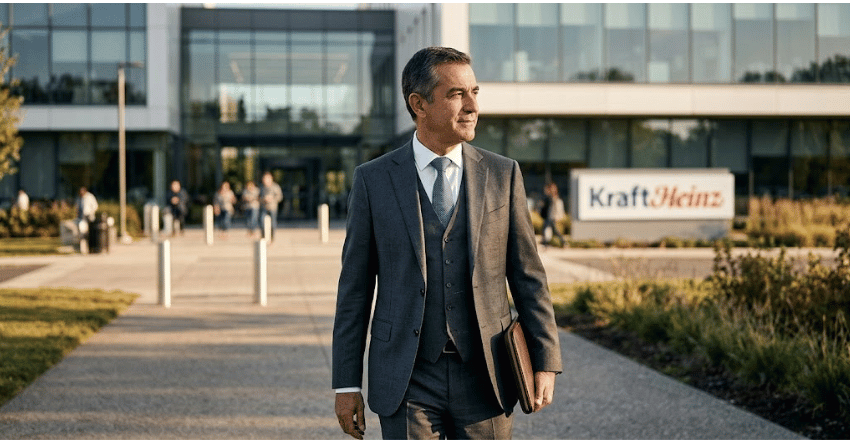
Kraft Heinz appointed Patricio as chief executive officer in 2019. He took the role after the company had experienced financial pressure, brand challenges and questions about its growth strategy. His task was not simply to maintain existing operations. Kraft Heinz needed to reconsider how it invested in its brands, organized its teams, and competed with newer food businesses.
Patricio emphasized rebuilding company culture and supporting stronger brands. His marketing background made brand relevance a central part of his approach. He became chair of the Kraft Heinz board in May 2022. At the end of 2023, Carlos Abrams-Rivera succeeded him as CEO, while Patricio continued as non-executive chair. The succession separated responsibility for daily management from board leadership.
Kraft Heinz’s 2026 proxy materials describe Patricio as its retiring executive chair, showing that his chairmanship also reached its conclusion. This timeline matters because some older profiles still describe him as the company’s current CEO or chair. As of 2026, those descriptions are outdated.
Albert Bourla’s Background and Education
Albert Bourla was born in Thessaloniki, Greece, in 1961. His professional background differs sharply from Patricio’s business and marketing education. Bourla trained as a veterinarian at Aristotle University of Thessaloniki. He also earned a doctorate related to reproductive biotechnology.
That scientific training gave him an unusual foundation for a corporate leader. He entered the pharmaceutical business with direct knowledge of medicine, animal health and biological research rather than starting in finance or general management. Bourla joined Pfizer’s animal-health division in Greece in 1993.
His first role involved veterinary medicine and technical responsibilities. He later moved through positions covering Europe, Africa, the Middle East, Asia and the United States. These assignments gave him experience in both developed and emerging healthcare markets.
How Albert Bourla Rose Through Pfizer
Bourla spent his career advancing inside Pfizer rather than moving between several corporations. He led parts of the company connected with animal health, established medicines, vaccines, oncology and consumer healthcare. He later became group president of Pfizer Innovative Health.
In January 2018, he was appointed chief operating officer. That position placed him close to the company’s research, manufacturing, commercial operations and overall strategy. Pfizer announced in October 2018 that Bourla would succeed Ian Read as CEO. His appointment became effective on January 1, 2019.
He later assumed the additional position of chairman. Pfizer continues to identify him as its chairman and chief executive officer in 2026. Unlike Patricio, whose best-known chief executive tenure has ended, Bourla remains responsible for leading his principal company.
Albert Bourla and Pfizer’s COVID-19 Response
Bourla became globally recognizable during the COVID-19 pandemic. Pfizer worked with German biotechnology company BioNTech to develop an mRNA vaccine against the virus. His role involved setting priorities, supporting rapid development, and managing one of the most closely watched pharmaceutical programs in modern history.
The vaccine project also brought intense public scrutiny. Pfizer faced questions about manufacturing, distribution, access, pricing and the company’s responsibilities during a global health emergency. Bourla’s leadership during this period demonstrated the scale of decision-making required in pharmaceuticals. A chief executive must consider science, regulations, supply chains, public policy, investors and patient needs at the same time.
His public profile grew far beyond the business community. He became associated with debates about vaccine development, pharmaceutical innovation and global access to medicine.
Miguel Patricio and Albert Bourla: Career Comparison
The main difference between the two executives is the type of expertise that carried them into senior leadership.
| Comparison area | Patricio | Bourla |
| Career foundation | Marketing and consumer products | Veterinary science and pharmaceuticals |
| Route to the top | Worked across several major corporations | Advanced mainly within Pfizer |
| Core management focus | Brands, consumers and organizational renewal | Research, medicine development and global healthcare |
| CEO start year | 2019 at Kraft Heinz | 2019 at Pfizer |
| Current status in 2026 | Former Kraft Heinz CEO and chair; AB InBev board member | Current Pfizer chairman and CEO |
| Major public challenge | Rebuilding a pressured packaged-food company | Leading a pharmaceutical company through a pandemic |
Patricio brought outside experience to Kraft Heinz. He had worked in tobacco, soft drinks, healthcare products, and brewing before entering the packaged-food industry.
Bourla brought deep institutional knowledge to Pfizer. By the time he became CEO, he had already spent roughly 25 years inside the company and understood many of its divisions.
Neither route is automatically stronger. Companies often choose an outside leader when they need a different perspective. They may favor a long-serving internal candidate when industry knowledge and operational continuity are more important.
What Their Leadership Styles Suggest

Patricio’s career suggests a strong belief in brands, people, and organizational culture. Consumer companies depend on emotional connections as well as product quality. A leader must understand why customers choose one familiar label over another. Bourla’s career suggests a focus on urgency, scientific investment and large-scale execution.
Pharmaceutical products require lengthy research, clinical evidence and regulatory approval. Leaders must balance speed with safety and compliance. Both careers also demonstrate the value of international experience. Patricio worked across the Americas and Asia.
Bourla held roles covering several geographic regions before moving into Pfizer’s top position. Global exposure can help executives avoid assuming that one market represents every customer, employee or patient.
Are Miguel Patricio and Albert Bourla Related?
No reliable public information indicates that the two men are related. They were born in different countries, followed separate educational paths,s and built careers in different industries. Patricio is Portuguese and became known through consumer-goods companies. Bourla was born in Greece and developed his career within Pfizer. Dan Schulman and Stéphane Bancel is a useful companion read here.
Their names may appear together because both led large publicly traded companies and began their best-known CEO appointments in 2019. They have also appeared in executive compensation studies and rankings covering leaders of major corporations. That shared placement should not be mistaken for a family connection or corporate partnership.
Why Their Careers Matter

The stories of Miguel Patricio and Albert Bourla show that there is no single formula for reaching the top of a global company. Patricio relied on broad corporate experience, brand expertise, and leadership across several consumer markets. Bourla combined scientific education with decades of internal advancement at one pharmaceutical company.
Their experiences also show how a leader’s reputation is shaped by the problems faced during a particular period. Patricio’s tenure became associated with efforts to renew Kraft Heinz after difficult years. Bourla’s tenure became closely linked with Pfizer’s pandemic response and its attempt to build future growth through scientific innovation.
Readers exploring other influential executives can visit Worthxyra’s Business section for profiles focused on entrepreneurs, corporate leaders and the strategies behind their careers. Worthxyra’s Articles section also provides space for broader explainers and industry coverage.
Conclusion
Miguel Patricio and Albert Bourla reached senior corporate leadership through notably different careers. Patricio became known as a consumer-brand specialist who moved between several global companies before leading Kraft Heinz. Bourla rose from Pfizer’s animal-health business to oversee one of the world’s largest pharmaceutical companies.
One brought broad marketing and transformation experience to packaged food. The other combined scientific training with decades of pharmaceutical management. Together, their careers provide two clear examples of how international experience, specialized knowledge,e and difficult leadership assignments can shape a global executive.
If you want to know about John Stankey and John Paulson then visit our Business category.
Frequently Asked Questions
Miguel Patricio is the former CEO and chair of Kraft Heinz. Albert Bourla is the chairman and CEO of Pfizer. Both are internationally experienced executives who became CEOs of their best-known companies in 2019.
No. His career was mainly in consumer products, beverages and packaged food. His employers included Coca-Cola, Johnson & Johnson, Philip Morris, AB InBev and Kraft Heinz.
No. Bourla joined Pfizer in 1993 and built his senior leadership career within the pharmaceutical company.
No. He served as CEO through December 2023. Carlos Abrams-Rivera succeeded him in January 2024. Patricio later concluded his service as Kraft Heinz chair.
Yes. Pfizer’s current leadership pages identify Bourla as chairman and chief executive officer in 2026.
He earned a degree in business administration from Fundação Getulio Vargas in São Paulo.
He studied veterinary medicine and earned a doctorate in reproductive biotechnology from Aristotle University of Thessaloniki.
No formal partnership is identified in their official corporate biographies. Their names are mainly connected through comparisons of major global business leaders.