

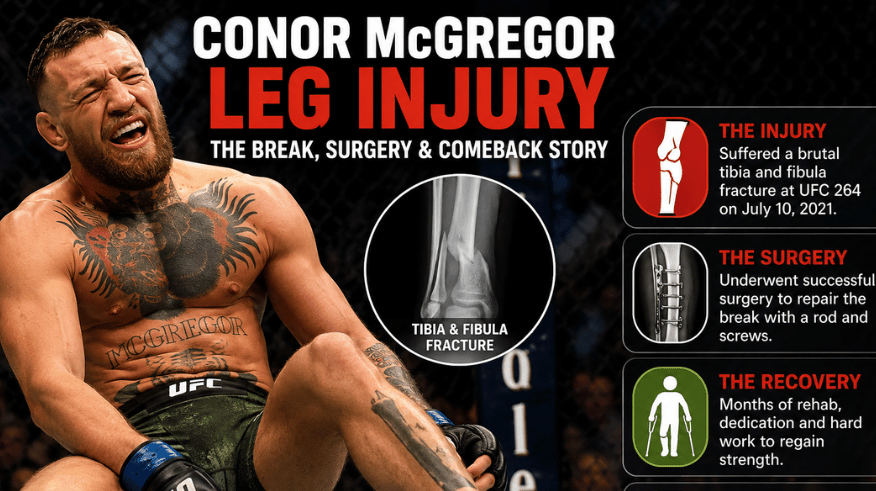
The Conor McGregor leg injury occurred during his third fight against Dustin Poirier at UFC 264 on July 10, 2021. McGregor fractured both his left tibia and fibula near the end of the opening round. Doctors repaired the damage through surgery, using a rod in the tibia and a plate with screws on the fibula.
The injury kept the former two-division UFC champion out of competition for almost five years. He eventually returned in July 2026, but his comeback ended with a separate knee injury against Max Holloway.
Conor McGregor’s Injury at a Glance
| Category | Details |
| Original injury date | July 10, 2021 |
| Event | UFC 264 |
| Opponent | Dustin Poirier |
| Injured leg | Left leg |
| Bones fractured | Tibia and fibula |
| Fight result | Poirier won by first-round TKO |
| Surgical treatment | Tibial rod, fibular plate and screws |
| Time away from UFC competition | Almost five years |
| UFC return | July 11, 2026 |
| Latest injury | ACL and meniscus damage in the opposite knee |
| Stated return target | Summer 2027 |
Direct Answer
McGregor broke the tibia and fibula in his lower left leg after stepping backward late in the first round against Poirier. Surgeons stabilized the fractures with an intramedullary rod, plate, and screws. He spent years rebuilding his strength before returning to the UFC in July 2026.
What Caused the Conor McGregor Leg Injury?
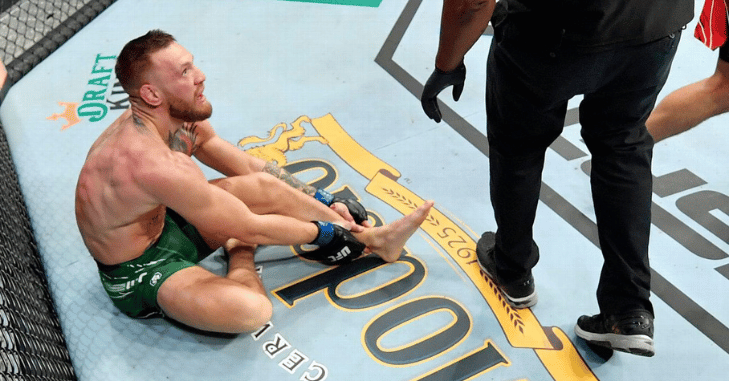
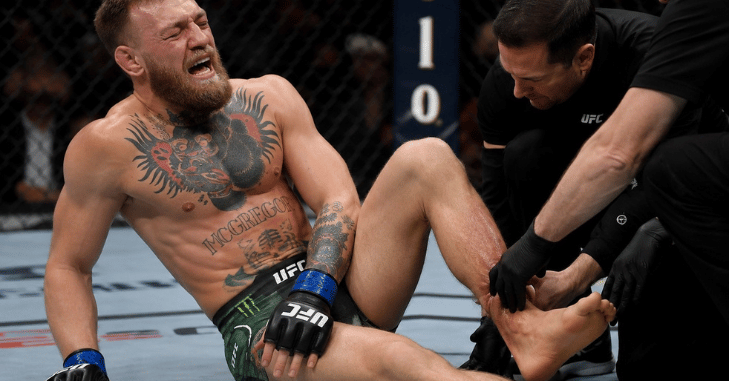
The decisive moment happened during the closing seconds of the first round at UFC 264. After throwing a punch, McGregor stepped backward. His lower leg folded beneath him near the ankle, and he immediately fell against the side of the Octagon. Medical staff entered the cage and placed the damaged limb in an air cast.
The injury ended the bout before a second round could begin. Poirier received a TKO victory through doctor stoppage at the official time of five minutes in round one. Footage of the incident led to debate about the exact movement that caused the break. Some viewers focused on the final backward step.
Conor McGregor Leg Injury: Others examined kicks exchanged earlier in the round. The confirmed medical outcome is clearer than the debate around the cause: McGregor suffered fractures of both the tibia and fibula.
Which Bones Did McGregor Break?
The tibia and fibula are the two long bones between the knee and ankle. The tibia is the larger bone and carries most of the body’s weight. The fibula is thinner and runs along the outside of the lower leg. It provides stability and forms part of the ankle joint.
Breaking both bones is a major orthopedic injury, especially for a professional fighter. Mixed martial artists depend on their legs for balance, movement, kicking, wrestling, and absorbing impact.
A healed bone is only one part of the return process. An athlete must also rebuild:
- Muscle strength
- Ankle mobility
- Balance and coordination
- Cardiovascular conditioning
- Confidence when kicking or changing direction
That wider rehabilitation challenge helps explain why returning to elite competition can take much longer than simply walking again.
What Surgery Did McGregor Have?
McGregor underwent a three-hour operation after the fight. Dr. Neal ElAttrache and trauma surgeon Dr. Milton Little performed the procedure in Los Angeles.
Surgeons inserted an intramedullary rod into the tibia. This type of rod sits inside the bone and helps maintain alignment while the fracture heals.
They also attached a small plate and screws to the fibula for added stability. McGregor’s representatives later said the operation successfully repaired both fractures.
The Surgical Hardware Explained
| Hardware | Location | Purpose |
| Intramedullary rod | Inside the tibia | Stabilizes the main weight-bearing bone |
| Metal plate | Along the fibula | Holds the smaller bone in position |
| Screws | Tibia and fibula area | Secure the rod or plate during healing |
The presence of metal hardware does not automatically prevent an athlete from returning to sport. Recovery depends on bone healing, mobility, pain, muscle function, and medical clearance.
How Long Did His Recovery Take?
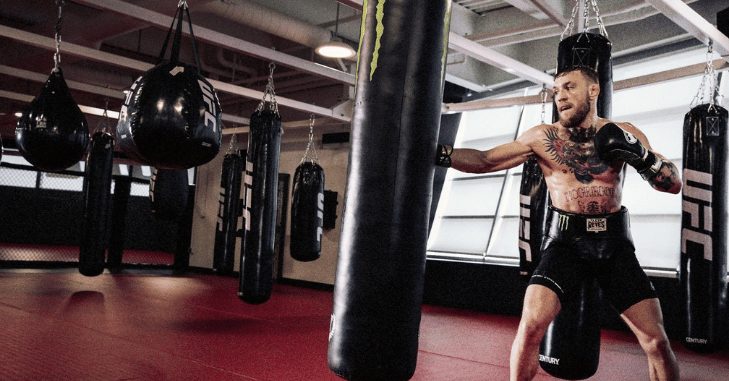
McGregor initially said he expected to spend about six weeks using crutches. That represented only the early stage of rehabilitation, not a full return to fighting. Over the following months, he shared footage of strength work, walking drills, cycling, and striking practice. The intensity increased as his leg became able to tolerate more force.
He later coached opposite Michael Chandler on The Ultimate Fighter 31. A fight between them was scheduled for UFC 303 in June 2024, but McGregor withdrew after breaking a toe during training. His competitive absence finally ended on July 11, 2026. By that point, almost five years had passed since the Poirier fight.
The lengthy gap was not caused by the broken leg alone. Training interruptions, the toe injury, scheduling issues, and other career developments also delayed his return.
Did McGregor Fully Recover from the Broken Leg?
He recovered well enough to resume professional training and compete in the UFC again. That is the clearest practical sign that the fractures had healed sufficiently for combat. Before his 2026 return, the UFC described the previous years as a difficult injury-recovery period. McGregor said he had regained confidence in his movement and remained committed to competing again. Jimmy Butler Injury is a useful companion read here.
Still, “fully recovered” can mean different things. A bone may be medically healed while the athlete continues to experience stiffness, reduced mobility, altered movement, or concern about reinjury. Public information does not provide a complete view of every medical examination or symptom he experienced.
For that reason, it is safer to say he achieved a competitive recovery from the fractures rather than assume his leg felt exactly as it did before UFC 264.
Readers following injury stories involving major athletes can also see Worthxyra’s guide to Kawhi Leonard’s injury history, which explains how repeated setbacks can affect a professional career.
What Happened in McGregor’s 2026 UFC Return?
McGregor returned against Max Holloway at UFC 329 on July 11, 2026. The comeback lasted only 69 seconds. He landed awkwardly after attempting a jumping kick and tried to continue briefly. He then signaled that he could not fight on.
McGregor later said he had injured the ACL and meniscus in his right knee. It was not a repeat fracture of the surgically repaired left leg. Instead, the new damage affected the opposite side.
He described it as the same type of knee injury he suffered during his first fight with Holloway in 2013, but in the other leg. This distinction matters because online discussions often group every setback under the original break—the 2021 injury involved two lower-leg bones. The 2026 injury involved knee structures.
Broken Leg vs. 2026 Knee Injury
| Detail | UFC 264 Injury | UFC 329 Injury |
| Year | 2021 | 2026 |
| Opponent | Dustin Poirier | Max Holloway |
| Side | Left | Right |
| Main damage | Tibia and fibula fractures | ACL and meniscus injuries |
| Mechanism reported | Leg folded during a backward step | Awkward landing after a jump kick |
| Treatment | Rod, plate, and screws | Surgery announced |
| Return impact | Nearly five years between UFC bouts | Targeting summer 2027 |
This comparison is one of the easiest ways to understand his injury history. The two incidents affected different legs and different anatomical structures.
Could McGregor Fight Again?
McGregor has said he wants to return by the summer of 2027. He also said he hopes to complete the final bout on his UFC contract. In his July 2026 update, he reported that he could walk without crutches and perform resisted leg-extension work. Those comments reflected his own assessment shortly after the injury, not formal clearance to compete.
An ACL and meniscus injury can require a long rehabilitation period. A future fight would depend on several steps:
- Successful surgery
- Restoration of knee motion
- Strength rebuilding
- Sport-specific training
- Medical clearance
- Agreement on an opponent and event
His age and long periods of inactivity may also influence the decision. McGregor turned 38 in July 2026, making another major rehabilitation especially demanding for an athlete competing at the UFC level.
For more profiles covering athletes and their careers, visit Worthxyra’s athlete stories and updates.
How the Injury Changed His Career
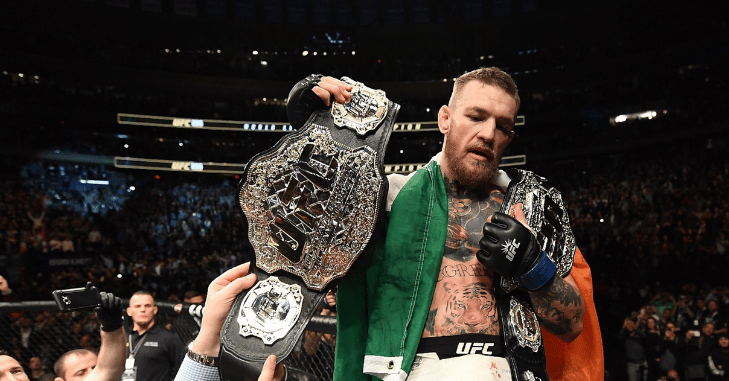
Before the Poirier trilogy, McGregor was already one of the most famous fighters in combat sports history. He had become the first UFC competitor to hold championships in two weight divisions at the same time. The broken leg created the longest competitive interruption of his career. It halted the Poirier rivalry, delayed future matchups, and shifted attention from his performances to questions about whether he could return.
His 2026 comeback answered one question: he could recover enough from the fractures to compete again. It created another question almost immediately. Can he complete one more rehabilitation after sustaining serious damage to the opposite knee? That answer will depend on his surgery, recovery, training, and long-term health rather than promotional plans alone.
Worthxyra readers can browse the site’s wider collection of celebrity and public-figure profiles for more fact-based career timelines.
Final Takeaway
The Conor McGregor leg injury was a serious double fracture involving the left tibia and fibula. Surgery stabilized the bones with a rod, plate, and screws. He eventually completed the long journey back to UFC competition.
His 2026 return showed that the original break did not permanently end his fighting career. The new ACL and meniscus injury now presents a separate challenge. McGregor has set summer 2027 as his intended return window, but his future will depend on surgery, rehabilitation, and medical clearance.
Frequently Asked Questions
It happened on July 10, 2021, during his trilogy fight against Dustin Poirier at UFC 264 in Las Vegas.
Reports commonly described the incident as a broken leg. The confirmed fractures involved the tibia and fibula in his lower left leg, close to the ankle area.
Yes. Surgeons inserted a rod into the tibia and used a plate with screws to stabilize the fibula.
He did not compete in another UFC fight until July 11, 2026. That was almost five years after UFC 264, although several factors contributed to the full absence.
He did not compete in another UFC fight until July 11, 2026. That was almost five years after UFC 264, although several factors contributed to the full absence.
No. The 2021 fractures affected his left lower leg. The ACL and meniscus injury reported in 2026 affected his right knee.
He had not announced his retirement as of July 22, 2026. He said he planned to undergo surgery and hoped to return by summer 2027 for the final fight on his UFC contract.
Poirier officially won by first-round TKO through doctor stoppage. The bout could not continue after McGregor suffered the fracture.